
Jan 2026 – presentStarted at HackLondon 2026
StudyCanvas
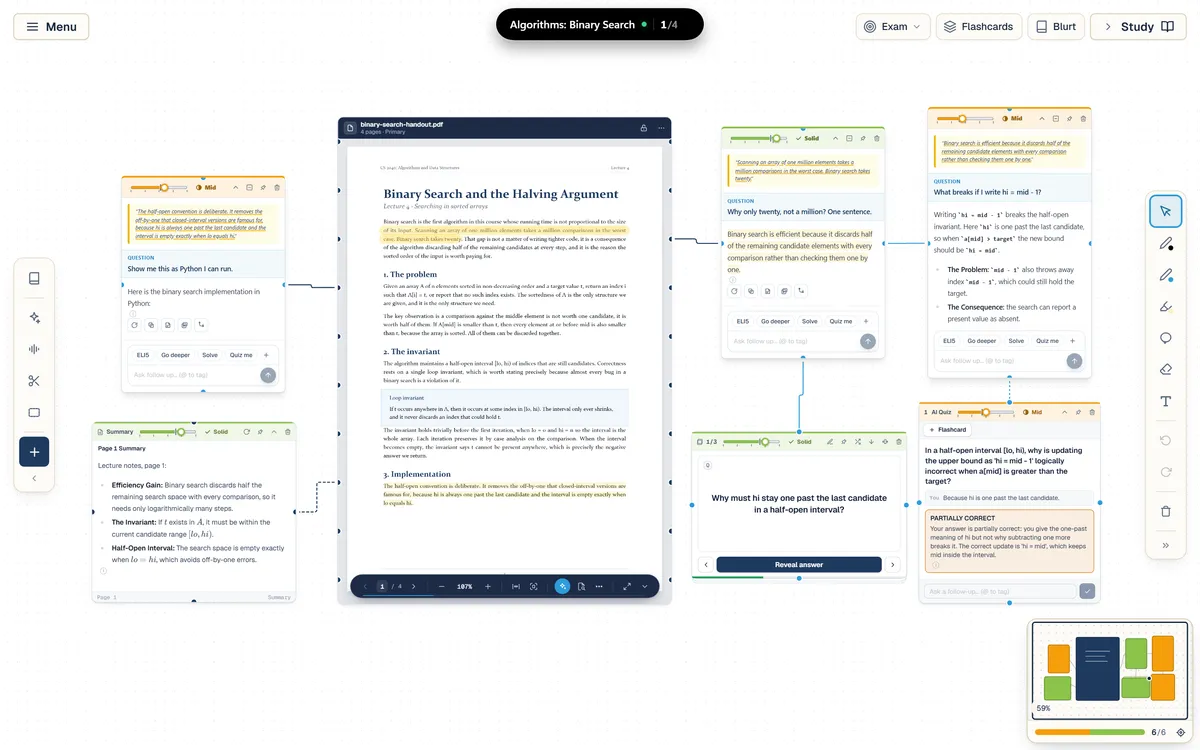
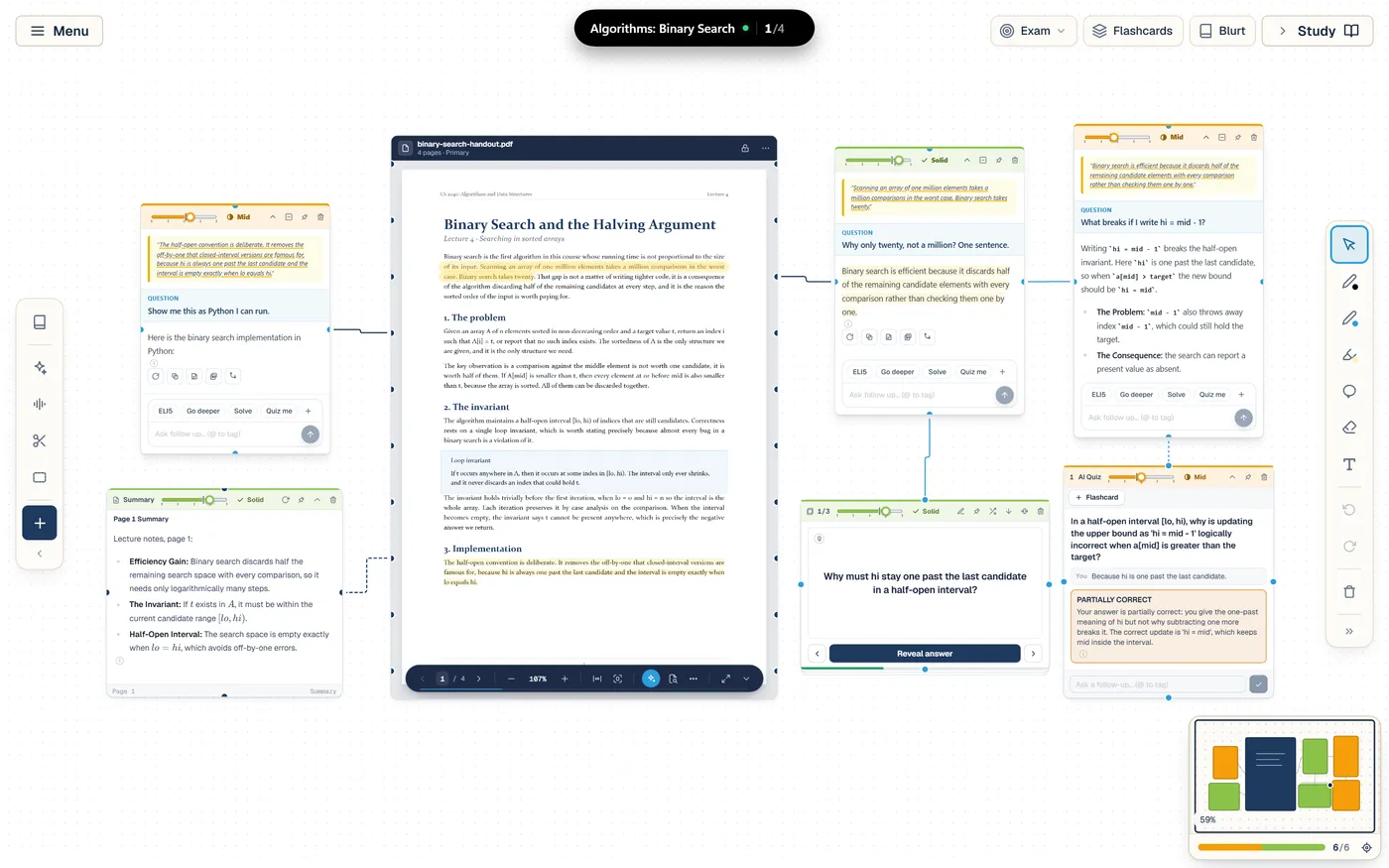
A spatial AI study workspace. Highlight a passage, ask about it, and the answer becomes a node you can branch, quiz yourself on or turn into flashcards.
- students using it weekly
- 10
- tools on one canvas
- 23
- lines of source
- 228k
- commits since February
- 2,138
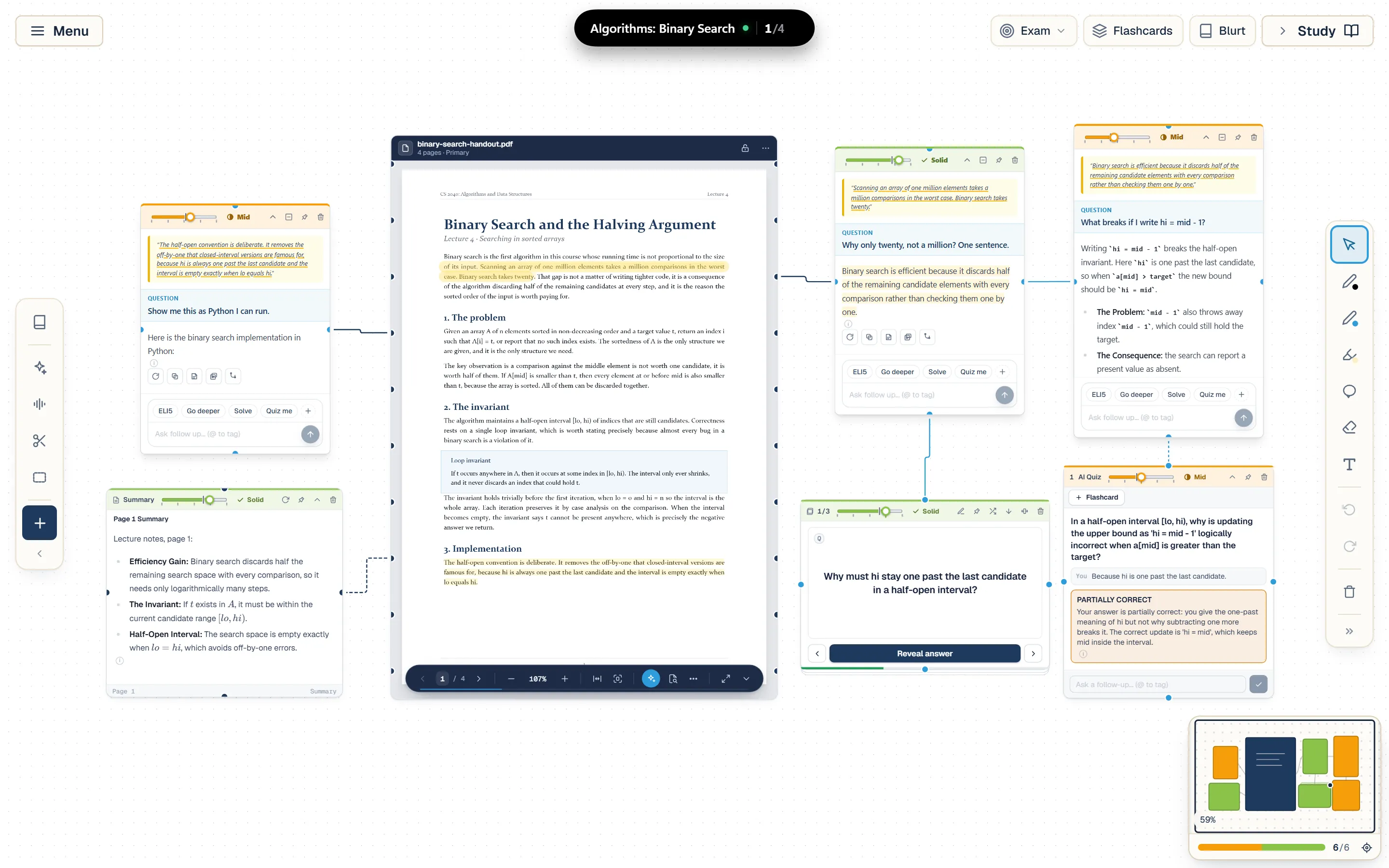
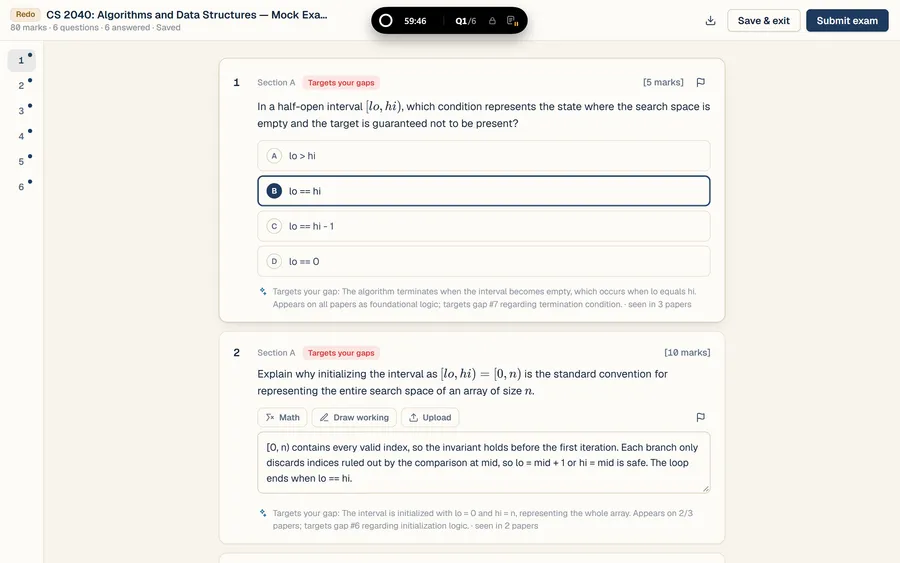
AI chat collapses learning into one scrolling column. A useful answer might come from one line of a PDF, lead to three follow-up questions, become a flashcard and later a mock-exam topic, and a transcript loses all of that structure. StudyCanvas keeps the source and the reasoning on the same infinite canvas.
A highlight sends Claude Haiku 5.5 the exact selection, its page context and the parent answer, and the response streams into a linked node. Gemini still handles voice, images, web search and scanned pages, and takes over for text if Claude is ever unavailable. Every in-flight request owns an AbortController, so closing a node cancels the work and settles what has arrived into something readable. Python runs in the browser through Pyodide, so the server never executes a student’s code. Workspaces are local-first: a real folder through the File System Access API, with IndexedDB where that isn’t available.
Every answer, quiz, flashcard and summary carries a confidence slider from Lost to Perfect, and the rating fades over time to decide what comes back first. Blurt tests recall with the book closed: you say what you remember, it maps your words onto the lecture’s key ideas, and it marks what you missed.
Ten students use it every week, including the students I tutor.